Roadway Signs — Illinois Driver's License Practice Test
55 questions in this topic · 30 drawn at random this round
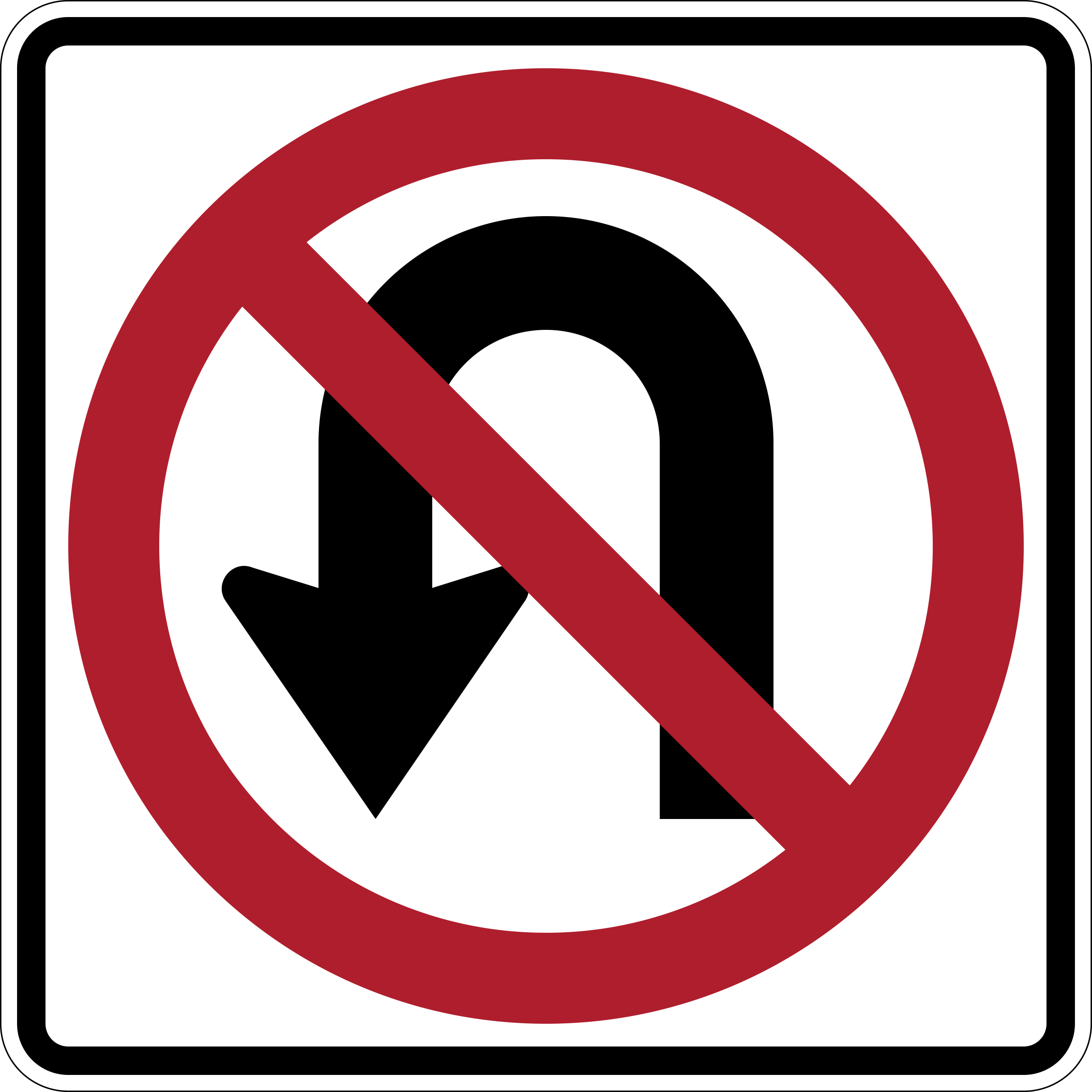
Where are No U-Turn signs posted, and who may use openings in a divided highway?
Session Progress
This Illinois Driver's License Roadway Signs practice set has 55 practice questions based on the official exam materials, each with an instant explanation. You need 80% on the real Illinois Driver's License knowledge test to pass.
Sample questions
Three questions from the Roadway Signs bank with the correct answer and an explanation. The practice quiz above draws 30 questions at random from the same bank.
How are roadway signs classified, and how is each type identified?
- Regulatory, warning, and guide — identified by shape and color — Correct answer
- Speed, parking, and detour — identified by size
- Federal, state, and local — identified by number
- Day, night, and emergency — identified by lighting
Explanation: Roadway signs are classified as regulatory, warning, and guide signs. Each type is identified by its shape and color.
Handbook: Roadway Signs — Sign Categories
What does an eight-sided red sign mean, and what must you do?
- STOP — make a complete stop at the stop line — Correct answer
- YIELD — slow down but do not stop
- WARNING — proceed with caution
- DETOUR — follow another route
Explanation: An eight-sided red sign means STOP. You must make a complete stop at the stop line.
Handbook: Roadway Signs — STOP Sign
At a STOP sign with no stop line and no crosswalk, where must you stop?
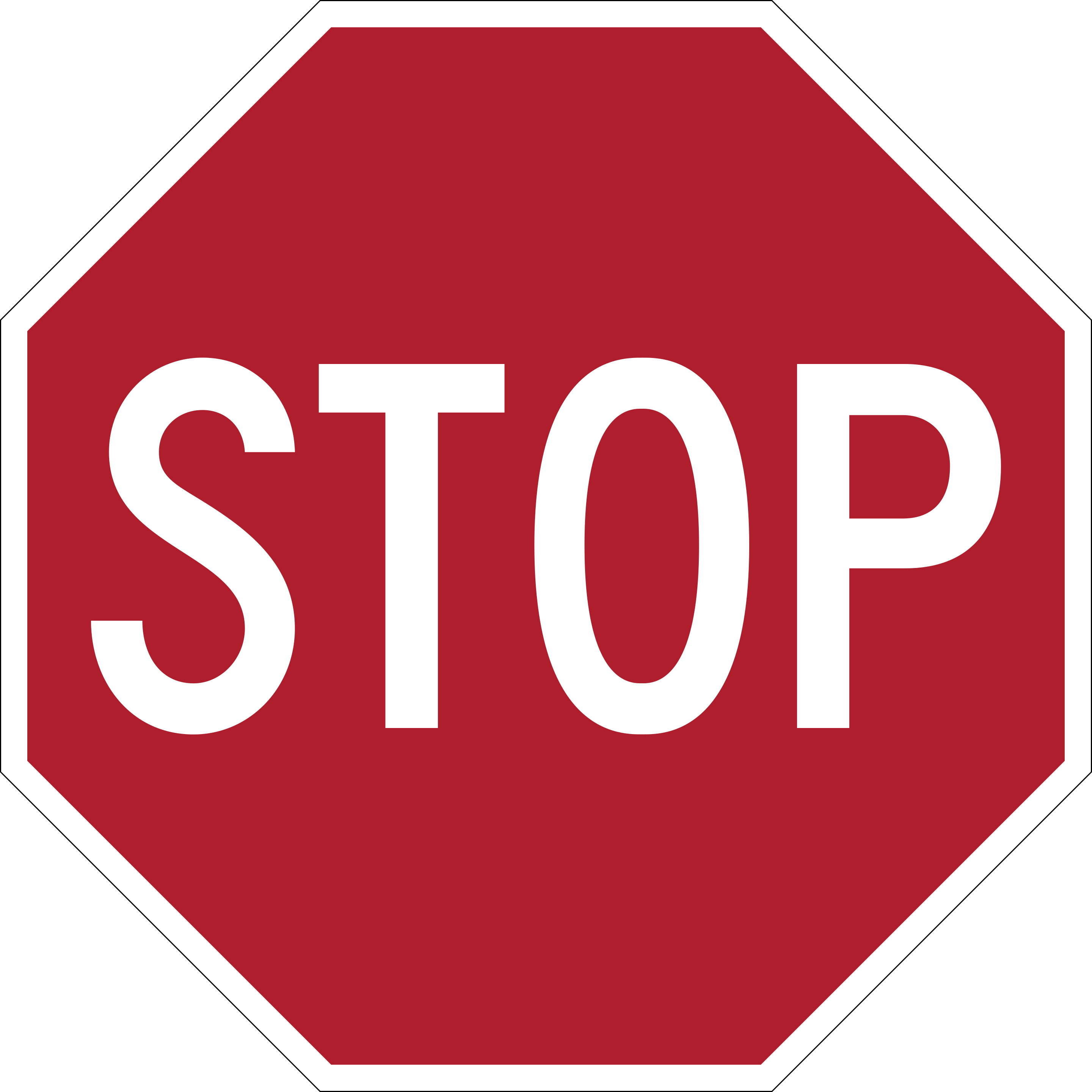
- Before entering the intersection — Correct answer
- In the middle of the intersection
- Anywhere past the sign
- You do not need to stop
Explanation: At a STOP sign, if there is no stop line, stop before entering the crosswalk. If there is no crosswalk, stop before entering the intersection.
Handbook: Roadway Signs — Stopping at a STOP Sign